
Recently, someone sent me a clip of Eastern Orthodox apologist Jay Dyer claiming that the Catholic magisterium has contradicted itself—specifically on the topic of Islam. According to Jay, some popes have affirmed that Muslims worship the same God as Christians, while others, like Pope Urban II, allegedly declared that Muslims worship demons.
Given that my doctoral dissertation focuses on magisterial reversals, I figured—okay, I’ll bite. Let’s unpack this.
The Claim: A Contradiction in Papal Teaching?
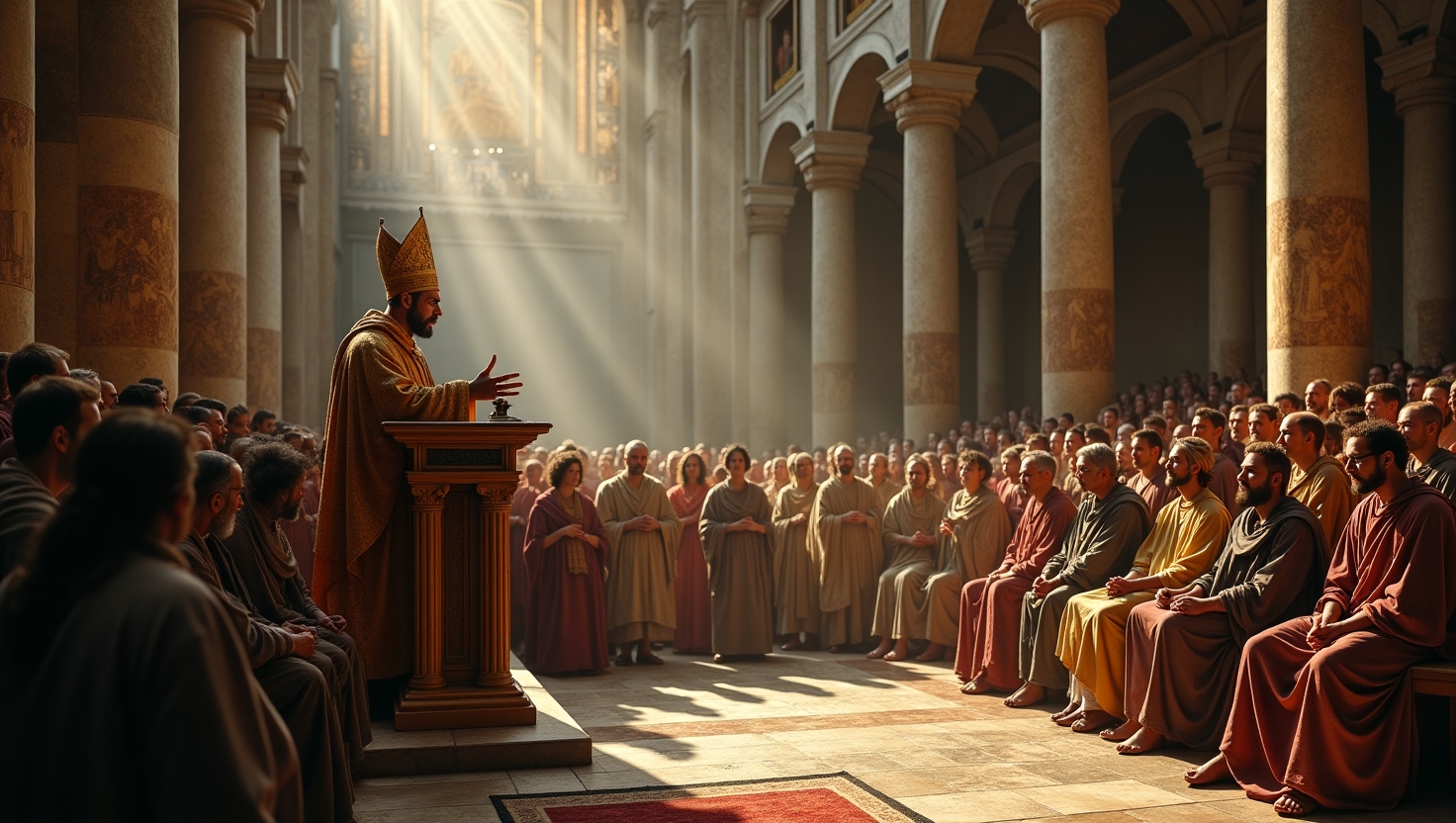
Jay Dyer’s argument centers on a quote attributed to Pope Urban II at the Council of Clermont in 1095, where the First Crusade was called. The quote reads:
“All who die by the way, whether by land or by sea, or in battle against the pagans, shall have immediate remission of sins. This I grant them through the power of God with which I am invested. O what a disgrace if such a despised and base race, which worships demons, should conquer a people which has the faith of omnipotent God.”
Jay’s takeaway? This quote contradicts the teaching of later popes—especially those of the Second Vatican Council—that Muslims and Christians worship the same God. If that’s true, it would mean a doctrinal contradiction in the magisterium.
But does this argument actually hold up?
First Things First: Is This Quote Reliable?
Here’s the first problem: we’re not even certain that Pope Urban II actually said this.
The acts of the Council of Clermont were never preserved in an official capacity. What we do have are five different accounts of the speech given by Urban—written by men who were present—but these accounts are not identical. They differ in content, tone, and theological emphasis.
The specific quote Jay cites comes from the account written by Fulcher of Chartres. But Fulcher didn’t begin writing his version until seven years after the Council. Was he writing from memory? Did he have access to earlier notes? We simply don’t know.
To complicate things further, Fulcher’s original version of the speech hasn’t survived. What we have today is a later manuscript tradition that may or may not reflect his initial wording. The quote in question—about a “base race” worshiping demons—appears in only one of the five accounts. None of the others mention it.
So even from a purely historical standpoint, this quote rests on a shaky foundation. And if your whole case hinges on one questionable quote with murky provenance, that’s already a major red flag.
But Even If Urban Said It—Was It Magisterial?
Let’s assume, for the sake of argument, that Pope Urban II did make this statement. Would that automatically make it part of the Church’s magisterium?
Not necessarily.
One of the first things I teach students in courses on Catholic theology is the difference between personal opinion and magisterial teaching. Even popes—yes, even popes—can and do express personal views in speeches, letters, and documents. Not every papal statement is intended to bind the faithful or express official doctrine.
So here are the hurdles Jay would need to clear for his argument to work:
- Demonstrate historical reliability. He’d need to show that this quote is accurate and not an embellishment or distortion in the manuscript tradition.
- Prove it’s magisterial. He’d need to establish that Pope Urban was speaking in his capacity as head of the Church, intending to propose a doctrinal teaching.
- Show it was doctrinal in nature. Not just rhetoric, not just a wartime appeal—but an actual teaching about the nature of God and worship.
If any of those steps fail, the contradiction he’s claiming falls apart.
And Even If It Were Magisterial…
Let’s entertain the absolute worst-case scenario: suppose Pope Urban II did say it, and it was magisterial.
What then?
Well, Catholic theology allows for the possibility of non-definitive magisterial statements that are reformable—that is, subject to correction or clarification by later popes or councils. This does not contradict the Church’s doctrines of infallibility or indefectibility, because neither of those claims that every single papal statement is free from error. Infallibility is narrowly defined and applies only under specific conditions.
So even if one pope expressed a non-definitive theological opinion that was later corrected or nuanced by a subsequent pope or ecumenical council, that’s not a crisis. That’s how the magisterium works—development, not destruction.
So again—what’s the big deal?
The Bigger Problem: Misunderstanding the Magisterium
Here’s where things get personal. Frankly, I don’t think Jay Dyer has taken the time to truly understand the magisterium, either in theory or in practice. He’s shown a consistent misunderstanding of Catholic teaching authority—even dating back to his first appearance on my channel.
This isn’t just about this one quote. It’s about a broader pattern of cherry-picking isolated statements, interpreting them without context, and then treating them as definitive proof of contradiction. That’s not serious theological analysis. That’s reactionary apologetics.
What We Should Be Asking
This whole episode highlights a deeper lesson for anyone serious about theology or Church history: whenever someone throws out a quote from a pope and says, “See? Contradiction!”—we need to slow down and ask better questions:
- What’s the source of this quote?
- Is it historically reliable?
- Does it conflict with other contemporary accounts?
- Could it be the result of textual corruption?
- Was it a magisterial act?
- If so, was it definitive or reformable?
If we’re not asking those questions, we’re not engaging with the material seriously. We’re just reacting. And that’s not how we arrive at truth.
Final Thoughts
So, does Jay Dyer’s argument hold up? No—not historically, not theologically, and certainly not magisterially. This isn’t the magisterial contradiction he’s hoping for. It’s a misreading of history and a misunderstanding of Catholic doctrine.
Thanks for reading. If you found this helpful, feel free to share it—and stay tuned for more analysis like this. Until next time.